Openfilm (beta) is a new video sharing site and online community of independent filmmakers, film schools, festivals and audiences who want to discover, watch, and share the best web video in high-definition, for free.
For a beta site, it is fully functional, beautifully designed, and easy to navigate. HD is a BIG plus! They've just added:
Recommendations
To check out current video recommendations from their editors.
Reviews
In this section they deconstruct some of the best works on the site.
Blogs
Where staff members share production tips, industry news, and other stuff.
Film Festivals
Search and browse a huge database of festivals past, present, and future.
RSS Feeds
Subscribe and stay updated about the content of almost every page.
Here is animated video, titled "Monsters" by Brion, that I like. Enjoy!
Cybercast credit: OpenFilm
Showing posts with label HD. Show all posts
Showing posts with label HD. Show all posts
January 11, 2009


December 27, 2008
YouTube Turns on HD: Perish Those Grainy Web Videos?
Just about a month ago YouTube was testing high-definition videos. It seems like this feature is now officially released. A large number of videos that fulfilled YouTube's criteria for HD encoding now sport a "Watch in HD" button instead of the old "Watch in high quality." While I have not seen any official statement from YouTube yet, you can already find a lot of HD videos on YouTube if you do a search for 'HD' on the site.
Until now
Until now you could only see these HD versions if you added "&fmt=22" to a YouTube URL and it was almost impossible to know which video would work in HD. The quality is really amazing and rivals that of some of YouTube's closest competitors like Vimeo.
The price
Yes, there IS a price. Actually a requirement that might cost you some extra money -- you do need at least a 5 Megabit (download) broadband connection to watch HD videos without constant stuttering and buffering.
In the last couple of weeks YouTube has also rolled out a wide variety of new features, including the new wide-screen format (which was clearly in preparation for this release) and the addition of over 25 thousand new songs from music licensing firm Rumblefish, plus its AudioSwap feature.
Game-Changer
The new HD videos, however, are clearly a game-changer. Web video always had the contention of having relatively sub-standard video quality; being generally grainy; and also hard to watch ( especially YouTube). Now, you could easily put up a screencast, movie, or video on YouTube in HD see it in its full 720p glory.
Until now
Until now you could only see these HD versions if you added "&fmt=22" to a YouTube URL and it was almost impossible to know which video would work in HD. The quality is really amazing and rivals that of some of YouTube's closest competitors like Vimeo.
The price
Yes, there IS a price. Actually a requirement that might cost you some extra money -- you do need at least a 5 Megabit (download) broadband connection to watch HD videos without constant stuttering and buffering.
In the last couple of weeks YouTube has also rolled out a wide variety of new features, including the new wide-screen format (which was clearly in preparation for this release) and the addition of over 25 thousand new songs from music licensing firm Rumblefish, plus its AudioSwap feature.
Game-Changer
The new HD videos, however, are clearly a game-changer. Web video always had the contention of having relatively sub-standard video quality; being generally grainy; and also hard to watch ( especially YouTube). Now, you could easily put up a screencast, movie, or video on YouTube in HD see it in its full 720p glory.
August 29, 2008
The Olympic Games: Digital Media’s Coming of Age
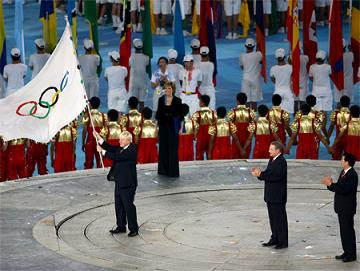
The just-concluded Summer Olympic Games featured an unprecedented amount of coverage over an equally unprecedented number of digital video formats and distribution types.
Some of the pre-event statistics, cited publicly, were:
• A minimum of 3,600 hours of broadcast coverage
• A minimum of 2,900 hours of live programming
• A minimum of 2,200 hours of streaming coverage on NBCOlympics.com
• All footage acquired in HD; also converted to 4:3 aspect ratio consumption
• Coverage of all 302 unique Olympic events
• U.S.-based coverage on NBC, USA Network, Universal HD, Oxygen, CNBC, and Telemundo
• Supplying content to a myriad of partners like Google, which streamed content on YouTube
• Supplying content to Amazon, NBC2Go, and mobile phones
• Video on Demand (VOD) of noteworthy coverages: "Highlights," "Rewinds," and "Encores."
Just the ability to cover 302 events, all in HD, was complex enough. But adding all the different digital video formats and distribution types to the efforts required a staggering amount of work to be done to ensure that the correct content was in the proper resolution, frame rate, aspect ratio, and scan type.
Simultaneously feeding multiple distribution venues with the right content in a timely fashion was crucial. Mistakes -- like sending a full HD clip to a telecommunication provider for distribution to their mobile phone customers -- had to be avoided. That's why the content requirements for each provider had to be, and were fully specified well in advance.
To ensure that this process ran as smoothly as it actually did, the whole operation was automated as much as possible. This translated into scripting routines that moved the content from ingest, through transcode, and to distribution. Content was moved in the most efficient manner possible, utilizing the latest file transfer acceleration technologies. Also, having visibility into all transfers and being able to prioritize transfers as they were "in stream" were necessary in order to react to developing stories as they occurred.
The Olympics we just enjoyed has also proven that we now have the infrastructure and technology for Internet TV to cover global events in real time. Congratulations to IBM and its Chinese and numerous other partners for a job so well done!

Some of the pre-event statistics, cited publicly, were:
• A minimum of 3,600 hours of broadcast coverage
• A minimum of 2,900 hours of live programming
• A minimum of 2,200 hours of streaming coverage on NBCOlympics.com
• All footage acquired in HD; also converted to 4:3 aspect ratio consumption
• Coverage of all 302 unique Olympic events
• U.S.-based coverage on NBC, USA Network, Universal HD, Oxygen, CNBC, and Telemundo
• Supplying content to a myriad of partners like Google, which streamed content on YouTube
• Supplying content to Amazon, NBC2Go, and mobile phones
• Video on Demand (VOD) of noteworthy coverages: "Highlights," "Rewinds," and "Encores."
Just the ability to cover 302 events, all in HD, was complex enough. But adding all the different digital video formats and distribution types to the efforts required a staggering amount of work to be done to ensure that the correct content was in the proper resolution, frame rate, aspect ratio, and scan type.
Simultaneously feeding multiple distribution venues with the right content in a timely fashion was crucial. Mistakes -- like sending a full HD clip to a telecommunication provider for distribution to their mobile phone customers -- had to be avoided. That's why the content requirements for each provider had to be, and were fully specified well in advance.
To ensure that this process ran as smoothly as it actually did, the whole operation was automated as much as possible. This translated into scripting routines that moved the content from ingest, through transcode, and to distribution. Content was moved in the most efficient manner possible, utilizing the latest file transfer acceleration technologies. Also, having visibility into all transfers and being able to prioritize transfers as they were "in stream" were necessary in order to react to developing stories as they occurred.
The Olympics we just enjoyed has also proven that we now have the infrastructure and technology for Internet TV to cover global events in real time. Congratulations to IBM and its Chinese and numerous other partners for a job so well done!
Subscribe to:
Posts (Atom)